

Capital Advisory
Australia’s data centre pipeline is estimated to be worth more than $150 billion. At the same time, AEMO forecasts data centres will grow from around 2% of grid-supplied electricity today to 6% by FY2030 and 10% by FY2050. For the energy sector, that’s not just another growth story. It’s one of the strongest emerging demand signals in the market.
This presents a significant economic opportunity, but only if we get the settings right.
Data centres are becoming critical enablers of growth, innovation and productivity, strengthening Australia’s position in the global digital economy. However, unmanaged growth risks placing additional pressure on electricity networks, increasing wholesale energy costs and intensifying competition for scarce resources such as water. As AI adoption accelerates, the sustainability of the infrastructure supporting that growth is becoming just as important as the technology itself.
That’s why the proposed Bring Your Own Power (BYOP) framework matters.
Following recent Energy and Climate Change Ministerial Council discussions, governments are moving towards a nationally consistent framework to ensure large-scale data centres support the infrastructure needed for their growth without imposing additional costs on consumers. Consistent with the AEMC’s recent advice to ministers, the emerging model is straightforward: large new loads should bring clean energy, secure firm capacity, be flexible, and pay their way. While Queensland and the Northern Territory have raised concerns about potential impacts on investment and advocated for a more technology-neutral approach, most jurisdictions support reforms designed to ensure rapid data centre growth strengthens Australia’s energy system and accelerates new clean energy investment.
Done well, BYOP is more than a cost-allocation mechanism. It’s an investment catalyst.
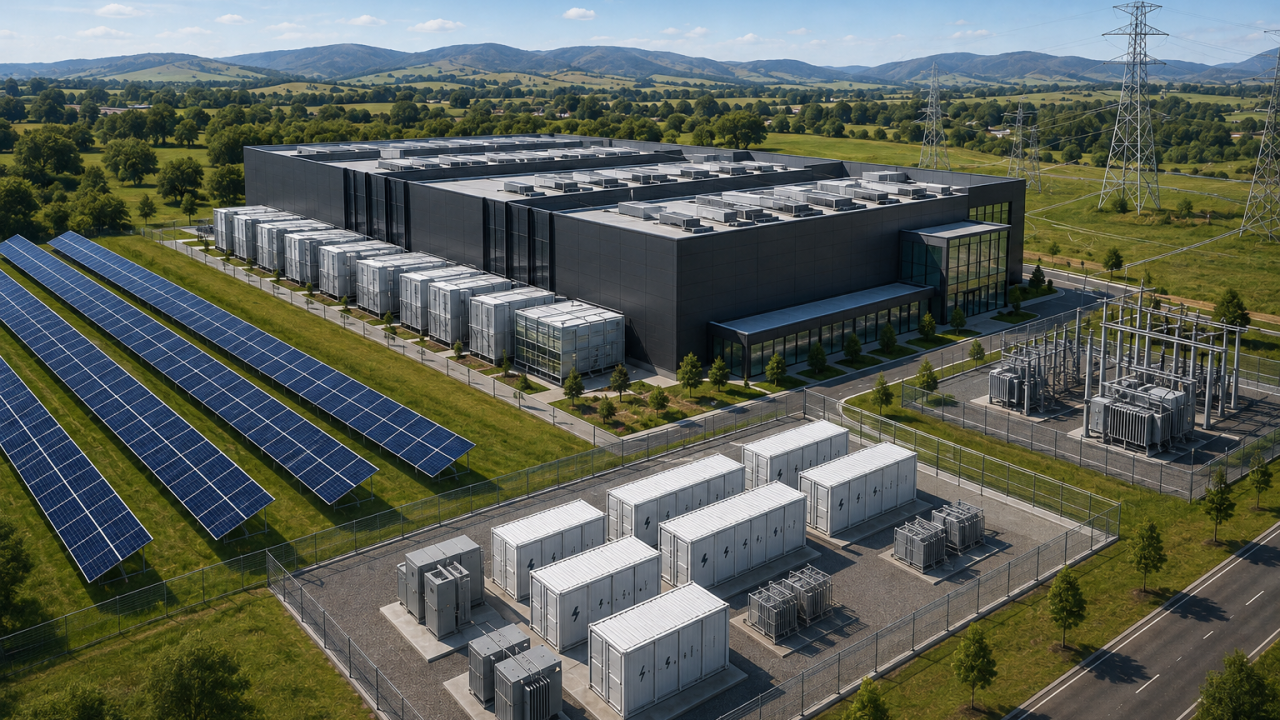
Long-term, reliable demand from data centres can underpin new renewable generation, storage and hybrid projects, providing the commercial certainty many developers have lacked to reach final investment decision. For generators and storage providers, BYOP should be viewed as a strategic opportunity rather than a compliance obligation.
The growing focus on co-location creates an additional advantage. Partnerships between developers and data centres have the potential to unlock faster connection pathways, more efficient network outcomes and long-term offtake arrangements. In a market where connection timing and revenue certainty can determine project viability, those who engage early will be best placed to secure enduring partnerships and unlock the next wave of clean energy investment.
Modern data centres can also be more than passive consumers of electricity. Emerging market arrangements, ride-through capabilities and increasing operational flexibility mean data centres can become active participants in the power system, responding rapidly to changing network and market conditions. As data centres become larger and more sophisticated, AEMO increasingly sees flexible load and ride-through capabilities as part of the solution for managing a renewables-rich grid. Over time, data centres that can shift demand, support system resilience and co-locate with generation may become valuable assets in helping integrate higher levels of renewable energy at lower system cost.
Energy is only one part of the sustainability equation.
Water efficiency will be critical to maintaining community confidence in the sector’s growth. Advanced cooling technologies, water-efficient designs and innovative approaches to resource management (such as use of recycled water) are key to building digital infrastructure that is both economically and environmentally sustainable.
Ultimately, the long-term success of Australia’s AI industry will depend on maintaining a strong social licence to operate. Communities expect economic growth to deliver benefits without driving higher power prices, excessive water consumption or avoidable network costs. BYOP offers a credible path: pairing digital growth with new renewable investment and stronger system resilience.
The call to action is clear.
Government now has the chance to set a framework that aligns AI-driven demand with Australia’s energy transition, without leaving consumers to foot the bill.
Renewable developers and investors should see BYOP as one of the strongest investment signals in the market today. Those who build relationships with data centre operators early, and position around co-location, firming and long-term supply opportunities, will be best placed to capture the next wave of investment.
The future of AI and the future of energy are increasingly the same conversation.
If you’re weighing up how BYOP changes your strategy or investment case, get in touch with Gill Cashion.